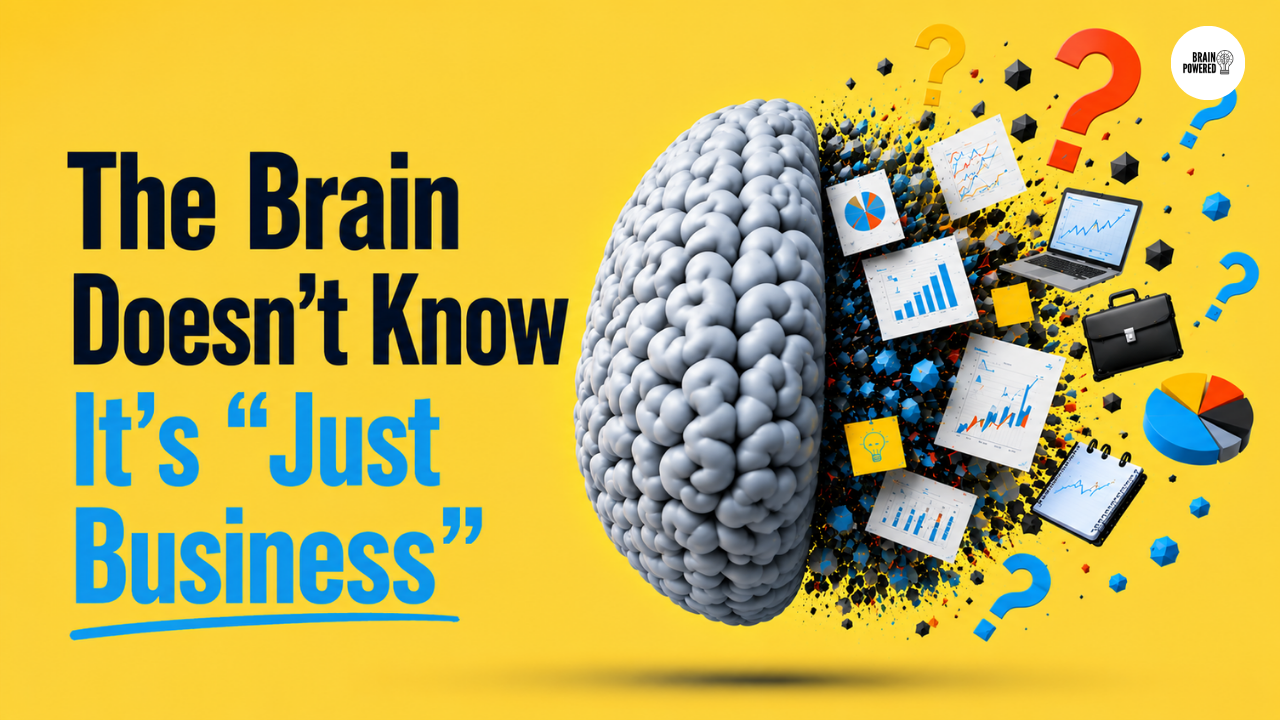
⚠️ Same brain, new workplace
Our organisations have changed beyond recognition. Our brains haven't. To the nervous system, an unexpected diary invite or a "Can we have a quick chat?" reads much the way a genuine threat did thousands of years ago. Before anyone has heard a single fact, the mind is already filling the silence: Have I done something wrong? Is my role at risk? What happens now?
Often the uncertainty is more exhausting than the news itself.
And this isn't weakness. When the brain shifts into protection mode, clear thinking, decision-making and confidence all drop - not because someone is less capable, but because their nervous system is doing exactly what it was built to do. Now multiply that across a workforce living through a restructure: slower decisions, stalled delivery, avoidable mistakes, quiet disengagement - precisely when you need people thinking clearly. The threat response doesn't respect your change timeline.
👀 The people who stay are watching too
It's easy to focus on those who are leaving. They aren't your biggest exposure. The people who remain are studying every one of these conversations: If that were me, would I be treated the same way? Can I still trust the people running this?
This is where culture is made or quietly hollowed out. Handle these badly and you don't just lose the people you let go - you lose trust, discretionary effort and, eventually, some of the people you fought to keep.
✨ A capability question, not a kindness one
Leading people through threat isn't a soft skill you hope your managers happen to have. It's organisational infrastructure - as real as your process and your legal obligations, and far more predictive of how the change is remembered.
So before the next hard conversation, most organisations ask: "Have we followed the correct process?" Important, but incomplete. The question that shapes culture is the second one: "How do we want this person to feel when they walk out of it?"
Because the organisation may call it business. 💙 The brain experiences it as something deeply human - and so does everyone watching how you handle it.
I spent years inside organisations making these calls before I moved to the other side of the table. If it's something you're wrestling with in your own, I'm always glad to compare notes. 🤝